
Critical Metals Fueling the AI and Energy Boom
How Strategic Materials Underpin the Next Generation of AI and Energy Infrastructure
Introduction
The convergence of artificial intelligence (AI) and advanced energy infrastructure is reshaping the global demand for critical metals in 2025. As AI data centers proliferate and energy systems expand to support digital growth, the need for conductive, durable, and specialized metals is reaching unprecedented levels. Industry forecasts suggest that AI data centers alone could consume up to 20% of global copper production by 2030, while natural gas systems continue to provide a reliable foundation for this explosive growth. This document breaks down the essential metals that drive the core components of natural gas pipelines, AI data centers, electric grid infrastructure, and natural gas power plants, highlighting both their roles and the emerging vulnerabilities in their supply chains.
Metals Used in Natural Gas Pipelines
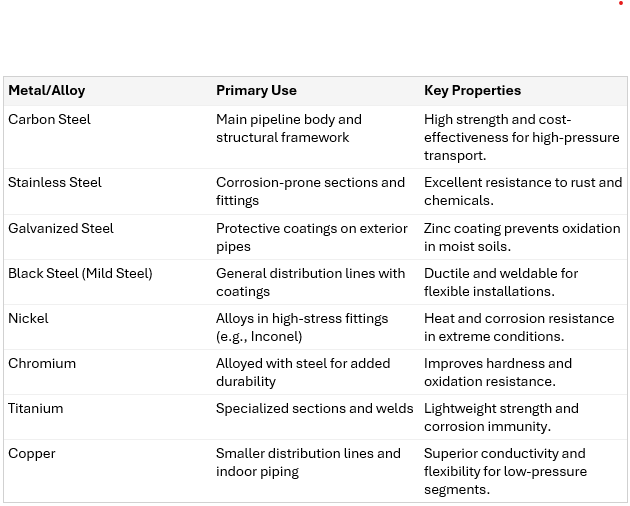
Natural gas pipelines are the arteries that deliver energy to AI hubs and urban centers. Their construction relies on a range of corrosion-resistant and high-strength alloys to ensure safety, longevity, and performance in diverse environments.
Metals Used in AI Data Centers
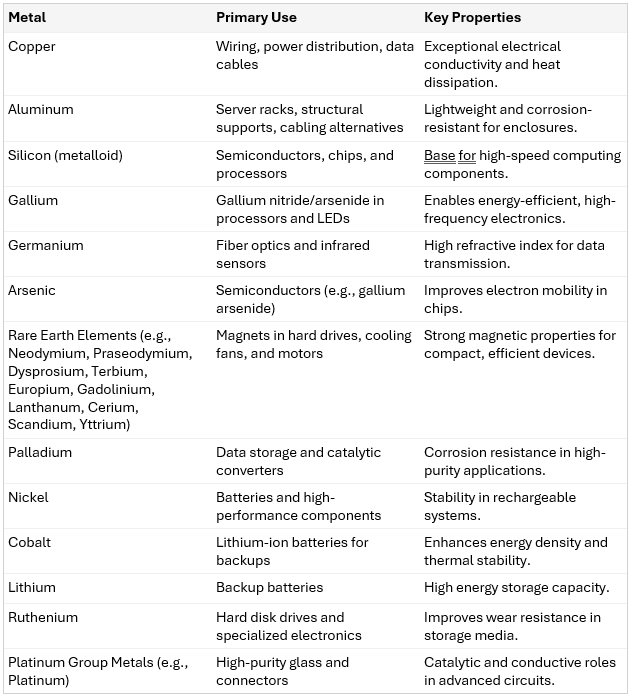
AI data centers are at the heart of the digital revolution, demanding high-conductivity and heat-resistant metals for servers, cooling, and power distribution. The proliferation of GPU-intensive workloads is also driving unprecedented demand for rare earth elements and specialty metals.
Metals Used in Electric Grid Infrastructure
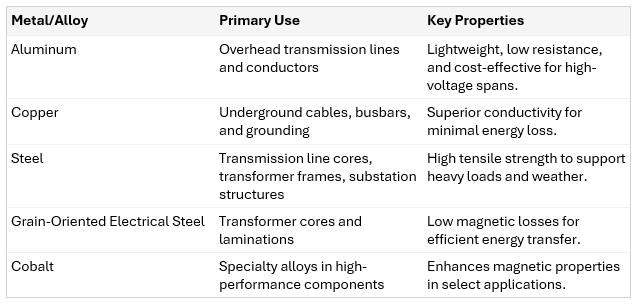
The electric grid connects data centers to power sources, relying on highly conductive metals for transmission and robust materials for mechanical support. Aluminum and copper are the primary workhorses, with specialized steels enhancing transformer efficiency and grid resilience.
Metals Used in Natural Gas Power Plants
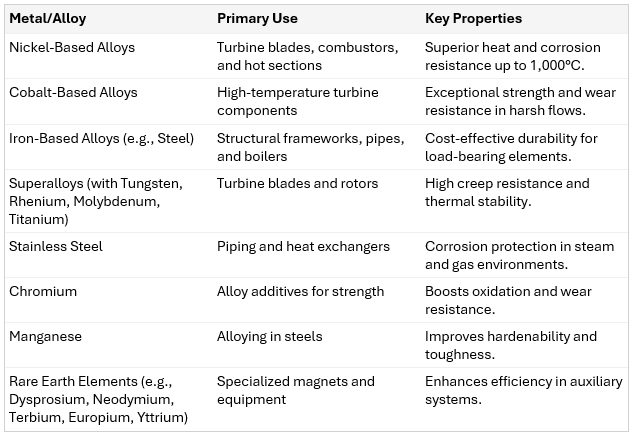
Combined-cycle natural gas power plants, often sited near AI hubs, use advanced superalloys to withstand extreme temperatures and ensure reliable, efficient baseload power. The following metals and alloys are essential to their operation:
Supply Chain Vulnerabilities and Outlook
The metals and alloys listed above form the invisible scaffolding of the AI and energy revolution. However, their supply chains are increasingly strained by the rapid pace of technological adoption, geopolitical tensions, and mining constraints. Scarcity of key materials—especially copper and rare earth elements—could drive price spikes of 20-50% by 2030. This makes supply security a top concern for both investors and policymakers.
· Investors: Watch for volatility and investment opportunities in copper and rare earth markets as demand surges.
· Policymakers: Prioritize domestic mining, recycling, and strategic reserves to secure the supply of critical metals and support grid resilience.
Conclusion
As AI and energy infrastructure become more intertwined, the importance of securing critical metals grows. The durability, conductivity, and specialized properties of these materials ensure the reliability and efficiency of next-generation systems, but their scarcity presents both economic opportunities and risks. Proactive strategies in sourcing, innovation, and policy will be essential to sustaining the AI-driven future.
